"How To Make An Oyster Habitat 'The Healthy Profitable Way' For Meat In Your Own Oyster Farm Even If You're Just Starting Out In Oyster Farming"
“That's Right, Finally Here's A Beginner's And Advanced Farmers Guide That Will Guide You On How To Make An Oyster Habitat For Profits Or Pleasure Even If You've Never Done Any Form Of Shellfish Farming Before!"
Date:
Name: Gerard Dawn
Dear Oysters Owner Or Farmer:
You've been searching around for information on how to raise oysters, but you not finding enough guidelines to get you started? Or you have some questions you need answers to when raising oysters? Well look no further because I've got the answers to all questions you may have to raising your own healthy oysters.
Oyster farming has ancient roots, dating back to the Roman Empire, when people along the coasts of Europe began cultivating oysters in shallow tidal waters.
The Romans are known to have developed early techniques for managing oyster beds, particularly in places like Britain and France, where they recognized the value of these shellfish as a food source.
After the fall of Rome, oyster farming declined in prominence but continued in various forms through the Middle Ages, especially in monastic communities around Europe’s coastlines.
In the 20th century, countries such as Japan, the United States, and Australia also adopted and adapted oyster farming practices. Innovations in breeding, disease management, and sustainable harvesting became central to the industry, especially after wild populations were threatened by pollution and overfishing.
Today, oyster farming is a global enterprise that blends traditional knowledge with advanced aquaculture technology, providing both economic benefits and ecological services such as water filtration and habitat restoration.
You too can raise big, healthy, profit-paying oysters, if you will merely meet certain clearly defined oysters requirements. If you do this, and it's easy, you need never worry about profits, you are sure to succeed.
The Benefits Of Raising Oysters...
Oysters are natural filter feeders, removing excess nutrients, algae, and pollutants from the water, which helps improve water quality and clarity.
Oyster reefs provide essential habitat for a variety of marine species, including fish, crabs, and other invertebrates, supporting biodiversity.
Oyster beds and reefs can help reduce erosion and buffer shorelines against storm surges and wave action, offering natural coastal defense.
Oyster farming provides a reliable and nutritious seafood option without depleting wild populations, contributing to food security.
The industry supports jobs in coastal communities through harvesting, processing, distribution, and tourism-related activities.
Oysters help capture and store carbon and nitrogen in their shells and tissues, playing a role in mitigating climate change impacts.
As you see there are lots of benefits as to why one would want to raise their own oysters. When done right oyster farming can be very rewarding and can bring some good profits as well. But it is very important that you know what you are doing when starting out because you can easily make costly mistakes.
Weather you want to learn how to be a oyster farmer or just want to master the art of producing tenda meat, having the correct information is needed to start your new hobby. Without information we would all be floundering in the dark. Knowing where and how to start with raising oysters will prevent your dream from becoming a disaster, so keep on reading...
Now How Can You Get It All In One Place?
If you want simple, easy read information on raising oysters and enjoy all the benefits of owning oysters, all in one place, finally there's now a complete guide to successful oyster farming.
Introducing...
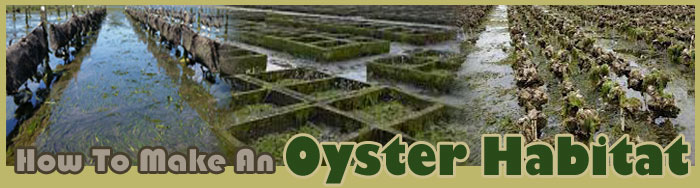
How To Make An Oyster Habitat
Creating an oyster habitat is a rewarding effort that supports marine biodiversity, improves water quality, and strengthens coastal resilience.
Oysters typically grow in brackish or saltwater environments, so it's important to choose an area with appropriate salinity levels. Tidal zones are ideal because they provide the natural ebb and flow of water that oysters need for feeding and growth.
Oysters need a hard surface to attach to—such as rocks, shells, or artificial reef structures—to anchor themselves and develop properly. In many restoration projects, recycled oyster shells or crushed limestone are used to create a foundation for new oyster larvae, known as spat, to settle on.
Water quality is another key factor. Oysters are sensitive to pollution and low oxygen levels, so it's important to ensure that the site has clean, well-circulating water. Reducing runoff from nearby land areas and monitoring nutrient levels can help maintain a healthy environment for oysters to grow.
In some cases, especially in urban or degraded environments, constructing artificial reefs or floating habitats can be effective. These structures can be made from eco-friendly materials designed to promote oyster settlement and growth.
Once established, an oyster habitat requires ongoing care and monitoring. Regular inspections help track oyster growth, detect disease, and assess environmental impacts. Community involvement, including volunteer efforts and education programs, can further support the long-term success of the project.
Ultimately, building an oyster habitat is more than just placing shells in water—it’s about creating a thriving ecosystem that benefits both marine life and people.
Oyster farming can be a profitable business, especially for coastal communities. Beyond food production, oysters are valued for producing pearls and contributing to eco-tourism in some regions.
"How To Make An Oyster Habitat" is a complete ebook that will guide you on how to raise a healthy oysters and get the most profit you can from them even if your an absolute beginner.
In detail you will discover:
Ecology of Oysters and Their Habitat Preferences
Functions of Oyster Habitats in the Ecosystem
Benefits of Establishing Oyster Habitats
Factors to Consider in Selecting an Oyster Habitat Site
Assessing Environmental Conditions and Suitability
Evaluating Legal and Regulatory Considerations
Habitat Creation Techniques
Oyster Reef Construction Methods
Artificial Substrate Deployment
Incorporating Natural Materials for Habitat Enhancement
Oyster Spat and Seed Placement
Sourcing High-Quality Oyster Spat and Seed
Best Practices for Spat and Seed Deployment
Monitoring and Managing Settling Oysters
Managing Oyster Habitat Growth and Development
Promoting Oyster Recruitment and Attachment
Habitat Monitoring and Maintenance Strategies
Enhancing Habitat Complexity and Stability
Restoring Degraded Oyster Habitats
Assessing and Rehabilitating Impacted Habitats
Implementing Habitat Restoration Techniques
Evaluating Success and Long-term Monitoring
Biodiversity and Oyster Habitat Relationships
Understanding the Importance of Biodiversity
Enhancing Oyster Habitat for Associated Species
Conservation Considerations and Synergistic Benefits
Community Engagement and Stakeholder Collaboration
Involving Local Communities in Habitat Restoration
Collaborating with Government and Nonprofit Organizations
Educating and Promoting Awareness of Oyster Habitats
Sustaining Oyster Habitats for Future Generations
It's All About Oysters Farming
A lot of people think that raising oysters requires a lot of work and care. But that's not totally true. Raising your own oysters doesn't require that much work as you think it would. Oysters do well without any assistance since they are versatile creatures.
If you are a beginner farmer who has large land, you can have no problem in raising oysters since you can build a great pond. You can grow you oysters in your shellfish pond all year round and reduce your expenses in travelling to other shellfish ponds. Reducing your costs will ensure that you make more profits in the long run.
You maybe thinking of raising oysters because you want to provide your family with fresh shellfish or you may want to raise for profit. What ever reason you may have to raising oysters you have to get the right guidelines in order to have healthy oysters.
"Look At What Other Farmers Say About How To Make An Oyster Habitat!"
"From Backyard Gardener to Coastal Steward"
Before reading *"How to Make an Oyster Habitat"*, I never imagined I could contribute meaningfully to marine conservation from my own coastal property. As a backyard gardener with no experience in aquaculture, I was nervous about starting something so unfamiliar. But this ebook broke everything down step by step—from selecting the right substrate to understanding salinity levels and even how to work with local authorities for permits.
What stood out most was how accessible it made the process feel. It wasn’t just technical—it was encouraging. The author clearly understands that not everyone has a marine biology background, yet they still want to make a difference. Now, just one year later, I have a thriving oyster habitat that’s filtering water, attracting marine life, and even providing a small harvest of delicious oysters for family dinners.
Beyond personal satisfaction, I’ve become part of a growing community of citizen stewards who care about our coastlines. This book didn’t just teach me how to build a habitat—it inspired me to take action. If you’re curious about sustainable living or looking for a way to give back to the environment, this is the perfect guide to start with.
Thank you again!
Michael Haywood.
"A Game-Changer for Small-Scale Farmers"
As a small-scale aquaculture farmer, I’m always looking for ways to expand sustainably. When I came across *"How to Make an Oyster Habitat"*, I was intrigued but skeptical—could such a compact guide really offer value? I couldn’t have been more wrong.
This book is packed with practical, science-backed advice tailored specifically for beginners and small operations. It covers everything from site selection to water quality monitoring, disease prevention, and even tips on marketing your oyster harvest. What impressed me most was the clear focus on both environmental impact and profitability.
Since implementing the methods outlined in the book, I’ve seen a significant improvement in both yield and ecosystem health around my farm. My customers love knowing that my oysters come from a habitat-friendly system, and I’ve even started offering workshops based on what I learned here.
If you're serious about entering the world of oyster farming—whether for pleasure, profit, or both—this book is a must-read. It’s like having a mentor guiding you through every stage of the journey.
Thank you again!
Steve Chapell.
"Empowering Urban Conservationists"
Living in a coastal city, I often felt disconnected from real environmental action—until I read *"How to Make an Oyster Habitat"*. This book opened my eyes to how urban dwellers can actively participate in restoring marine ecosystems, even without owning land or having formal training.
The guide helped me understand the basics of oyster biology, how to create a mini-habitat using floating cages, and how to collaborate with local conservation groups. I was even able to involve my neighborhood in a small restoration project along our waterfront. Seeing young people get excited about caring for the bay has been incredibly rewarding.
One of the best features of the book is its emphasis on sustainability and safety. It walks you through testing water quality, sourcing ethical materials, and ensuring your project supports—not disrupts—the local ecosystem.
Whether you're a teacher, student, or simply someone who loves the ocean, this book will empower you to take tangible steps toward healing our waters. It's not just a manual—it's a call to action, backed by knowledge and heart.
Thank you!
Jensen Villalobos.
"A Beginner’s Guide That Actually Works"
I had zero experience with aquaculture when I bought *"How to Make an Oyster Habitat"*, but I was determined to try something new. I wanted to grow my own oysters for personal use, but I didn’t know where to start. This book gave me the confidence—and the tools—to do exactly that.
From day one, the instructions were easy to follow. It explained complex concepts like spat settlement and filtration rates in simple language, and included diagrams that made visualizing the setup process much easier. I especially appreciated the troubleshooting section, which helped me avoid common mistakes and saved me time (and money!).
Now, months later, I have a functioning oyster habitat in a floating cage off my dock, and I’m already harvesting a few dozen for dinner. More importantly, I’m proud to know that I'm helping improve local water quality and support biodiversity.
This book proves that anyone, regardless of experience level, can make a positive impact. If you've ever thought about diving into oyster farming, even just for fun, this is the perfect place to begin.
Thank you!
Larry Hackett.
Many People Don't Know Where To Start!
Don't be one of those people who spend a fortune in getting guidance. This ebook will not only save you time on doing the research needed, but also in your pocketbook.
This guide won't leave you hanging not knowing what to do next. Its a step by step oyster farming plan that spells out your next step in plain English, you won't need to look for other information or join any other expensive oyster farming training course once you have this guide in your disposal.
But once you decide to get your copy today you will also receive these following detailed guides...
Detailed Guide #1
Oyster Feeding And Equipment
Oysters usually need nutritious food regularly to be healthy, happy and contended.
A diet that is high in energy, low in fiber and supplemented with ample of protein is considered ideal and wholesome to ensure the upward and steady growth of oysters.
Oysters can not be called a oyster unless it loves its food. Its feeding habits are characterized with rooting and pleading for more food and eating food with a great gusto and relish.
There is a specific and regulated pattern of feeding and eating habits for your oysters and before you give your oysters that extra morsel of food, ponder again!
With this ebook you will discover:
Healthy Oyster Feeding
Oysters & Their Biology
Selection Of Farm Site
Oyster Farming Methods
Oyster Management
This is a must have guide for every farmer who wants to proper feed their oysters, its a complete ebook to healthy oyster farming that will ensure that you feed your oysters the right nutrients from a young age.
+
Detailed Guide #2
Oyster Pond Design And Management
When just beginning in raising oysters the first thing you have to prepare is pond or shellfish tank.
Raising oysters requires you to build a proper pond for them. The pond provides the oysters with water where they can swim and keeps them warm in the winter.
Oysters pond can be designed using light and hard material you may already have in your farm.
The shellfish pond that you will farm your shellfish has to be in a protected area so make sure predators would not consume your shellfish.
With this ebook you will discover:
Oyster Pond Design
Selecting The Right Site
Cleaning And Thinning Oysters
Harvesting and Handling
Oyster Farming Equipment
With "Oyster Pond Design And Management" you’ll be amazed at how simple and easy it is to proper build a pond for your oysters. You will get all the different options to pond designs and the required equipment for oyster farming.
How Much Is That Worth To You?
"How To Make An Oyster Habitat" retails for $167. But today we have reduced our price to get you started and are offering it to you for only $47. All of the information on raising healthy oysters is simple to understand with images to guide you. You'll never find a guide that guides to on raising oysters in one ebook.
This guide eliminates the time you will spend searching for incomplete information about raising oysters. You don't have to purchase a guide on feeding oysters alone, then buy yet another guide on raising young oysters and keeping your oysters healthy separately, that will cost you over $100. Just by making a one time investment of $47 you will get all you need to know on raising oysters at a cost of the price.
You've never seen such a good offer, right? But to make you even more comfortable about your investment, I'll offer you my....
My 3 Month Money Back Guarantee!
EFFORTLESSLY START YOUR OWN OYSTER FARM 100% AT MY RISK WITH A FULL 90 DAY MONEY BACK GUARANTEE
If You Serious About Starting A Oyster Farm Then This Is Your Guide
When getting into oyster farming you should get your production goals set before you buy your oysters. Will you be raising your oysters in a pond? How are you going to manage your oysters in the winter seasons? You should also consider your costs for each traits.
You should also consider the type of climate you want to raise your oysters and the ranch in which you are going to raise your oysters. What are the advantages and disadvantages? Knowing this will help you in planning ahead and reducing the chances of getting unexpected expenses.
So if you are serious about becoming a successful oyster farmer, your first step is getting a copy of this guide. Once you get used to how oysters are managed you can be sure that you will produce high quality meat and make a fortune from the oyster farming industry.
"An Educator’s Dream Resource"
As a high school marine biology teacher, I’m always on the lookout for hands-on learning tools that engage students while teaching them real-world skills. *"How to Make an Oyster Habitat"* has become a cornerstone of my curriculum.
The ebook is well-structured, making it easy to assign sections as homework or reference during class projects. We recently built a small-scale oyster habitat with my students using recycled shells and floating cages. The process brought together lessons in ecology, chemistry, and environmental ethics—all while giving students a sense of accomplishment.
My students loved seeing the oysters grow and watching other sea creatures begin to inhabit the structure. One student even said, “It feels like we’re building a home for the ocean.” That kind of connection is rare in textbooks.
The author also includes helpful resources like permit checklists, volunteer opportunities, and links to further reading. This isn’t just a guide—it’s a comprehensive educational tool that bridges classroom learning with real-world conservation.
If you're an educator, scout leader, or youth group organizer, I highly recommend this book. It’s engaging, informative, and makes a powerful impact.
Kevin Clark.
"Healing the Bay, One Habitat at a Time"
When Hurricane Sandy hit our coastal town years ago, the damage to our shoreline was devastating. Years later, I found myself wanting to help restore the area—but I didn’t know how. Then I discovered *"How to Make an Oyster Habitat"*, and everything changed.
This book taught me how oyster reefs act as natural buffers against storms and erosion. With guidance from the ebook, I partnered with a local nonprofit to launch a community oyster habitat restoration project. We built several reef balls and placed them strategically along vulnerable shorelines.
The results have been incredible. Not only have we seen reduced erosion, but water clarity has improved, and marine life is returning. Volunteers love being part of the effort, and many have gone on to create their own habitats after reading the book.
It’s amazing what a handful of shells and some careful planning can do. Whether you're recovering from a storm, trying to protect your coastline, or simply want to heal the environment, this book offers a blueprint for success.
If you care about your coast, this is the resource you need. It’s practical, inspiring, and full of hope for the future of our oceans.
Thank you!
Leland Shields.
Nothing, Absolutely Nothing, Is Left Out!
For successful oyster farming, it is very important that you know what you are doing so to avoid failures. You have to know how to feed and give proper water for your oysters. You will have to know how to early notice and treat different types of health matters and diseases that will be of harm to your livestock .
And when it come to oyster farming this is the only guide that covers every aspect of raising healthy oysters. It's a complete guide to being a productive oyster farmer. So if you want to raise healthy oysters, make sure you have this ebook for guidance and reference!
(Instant Download)
Best Regards,
P.S. Imagine transforming a lifeless stretch of coastline into a thriving underwater sanctuary—just by knowing the right way to build an oyster habitat.
P.P.S. Every habitat you create doesn’t just help oysters grow—it cleans the water, supports marine life, and strengthens our coasts against erosion and storms.
"The Next Step Is Yours". Grab this one of its kind oyster farming ebook that will guide you on how to be a successful farmer today, don't waste anymore of your time trying to find incomplete information on raising oysters, get your guide to oyster farming just by investing in this guide...
Yes, Gerard I Too Want To Raise Healthy Oysters!
Yes, I Want Instant Download To This Ebook!
Yes, I Want It Now While It's Only $47.00!
(Important) I understand that this is an electronic book (e-book) that is downloaded and delivered in PDF format not by mail. It can be read or printed out from any computer that has adobe reader or from your Iphone and Ipad (immediately after payment). The download link will be sent to your Paypal or Clickbank email address.
I understand that this ebook will help me start a successful oyster farm even if I'm an absolute beginner and haven't tried raising shellfish before.
And I understand that by making a one time investment I will receive the following oyster farming ebooks:
How To Make An Oyster Habitat - Which will guide me on how to raise profitable oysters in my very own farm. I will discover how to care for them and profit from their produce.
Oyster Feeding And Equipment - This is a complete ebook on how to proper feed my oysters and make sure they get enough nutrients to grow healthy and strong.
Oyster Pond Design And Management - With this ebook I will get guidelines with dimensions on how to build a proper pond for my oysters and making sure they are well protected.
Get the one and only guide to successful oyster farming by adding this guide to your cart below and make a one-time Investment.
You will then be redirected to the secure members area where you will get immediate access to download your "How To Make An Oyster Habitat" ebook plus the two detailed guides. Another copy will be sent to your e-mail inbox.
Take Advantage Of This Discount Price And Secure Your Copy Now!
=============================================
[Option 1] - How To Make An Oyster Habitat (No-Detailed Guides)
- How To Make An Oyster Habitat
- Oyster Feeding And Equipment
- Oyster Pond Design And Management
=============================================
[Option 2] - How To Make An Oyster Habitat (With-Detailed Guides)
Learn how to make an oyster habitat with our step-by-step guide on oyster farming techniques, shellfish restoration, and sustainable aquaculture practices that promote water filtration, coastal resilience, marine biodiversity, and eco-friendly seafood production.
Frequently Asked Questions!
What is an oyster habitat?
An oyster habitat is a structured environment where oysters grow and thrive, typically made from shells, rocks, or artificial materials that provide a surface for spat (baby oysters) to attach.
Why should I create an oyster habitat?
Creating an oyster habitat supports water filtration, improves marine biodiversity, protects shorelines from erosion, and contributes to sustainable seafood production.
Can I make an oyster habitat in freshwater?
Oysters require brackish or saltwater environments to survive, so habitats should be established in coastal or estuarine areas with appropriate salinity levels.
What materials do I need to build an oyster habitat?
Common materials include recycled oyster shells, limestone, concrete blocks, or purpose-built reef structures that offer stable surfaces for oyster settlement.
How do I choose the right location for an oyster habitat?
Select a site with moderate tidal flow, suitable salinity, clean water, and minimal pollution—ideally in areas where oysters historically thrived.

 Oysters are natural filter feeders, removing excess nutrients, algae, and pollutants from the water, which helps improve water quality and clarity.







 - How To Make An Oyster Habitat
 - Oyster Feeding And Equipment

 What is an oyster habitat?