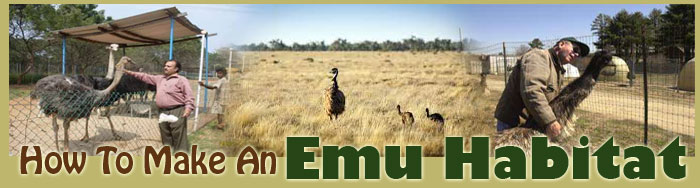
Making An Emu Habitat Frequently Asked Questions Here are 15 frequently asked questions on how to make an emu habitat:Provide a three-sided shed or covered run that protects them from sun, rain, and wind while allowing good airflow and easy access. Yes, include quiet, secluded corners with soft bedding where females can lay eggs safely and comfortably. Set up feeding areas away from resting zones to encourage natural movement and reduce contamination from droppings. Use elevated troughs or automatic feeders that keep food off the ground and minimize waste and spoilage. Water is essential—provide large, sturdy drinkers or automatic waterers that stay clean and are accessible year-round. Yes, emus tolerate cold well but need dry, draft-free shelter and extra bedding during harsh winters. Provide shade, ventilation, and access to cool drinking water—mist systems or shallow water pools can also help in extreme heat. Emus enjoy dust bathing to maintain feather health—include dry, sandy areas in their enclosure for this natural behavior. If possible, divide your pasture into sections and rotate birds regularly to prevent overgrazing and parasite buildup. Use dirt, sand, or straw-covered floors that cushion their joints and mimic natural surfaces better than concrete. Clean shelters weekly and replace bedding regularly; spot-clean feeding and watering areas daily to maintain hygiene and health. It’s generally not recommended due to size differences and disease risks—keep emus separate for safety and health reasons. Allow them time to adjust by keeping human interaction minimal, ensuring feed and water are immediately available, and monitoring stress levels. Avoid using weak fencing, overcrowding, poor drainage, lack of shelter, and placing feed and water in direct sunlight or contaminated areas. Observe them regularly for signs of illness, aggression, or discomfort—healthy emus are active, alert, and interact peacefully within their space. "Want To Raise Healthy Emu? Get Gerard Dawn's Ebook That Will Guide You On How To Raise Healthy Profitable Emu For Meat Or Eggs, In Your Own Farm Yard Even If You're
|

How To Raise Emu Contact Us Terms of Use Privacy Policy About Us FAQ Site Map