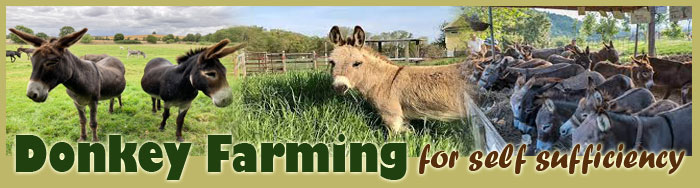
Donkey Farming For Self Sufficiency Frequently Asked Questions Here are 15 frequently asked questions on Donkey farming for self sufficiency:A general guideline is 1/4 to 1/2 acre per donkey, depending on available grazing—more land allows for better pasture rotation and reduced supplemental feeding. Yes, larger breeds like Mammoth Jacks are best for heavy work, while standard and miniature donkeys suit lighter tasks, companionship, and small gardens. Donkeys thrive on grass hay, pasture, and limited grain—overfeeding can lead to obesity and health issues, so a simple, balanced diet is best. They provide labor, manure for composting, natural pest and predator control, and emotional support—all helping reduce reliance on external resources. Yes, donkeys have been used for centuries to carry loads, pull carts, and travel long distances, making them excellent for off-grid transport and trade. Donkeys are intelligent and trainable but respond best to calm, consistent handling—positive reinforcement works far better than force or punishment. Yes, regular vet care including vaccinations, hoof trimming, and deworming is important to keep donkeys healthy and disease-free. Yes, donkeys adapt well to cold weather as long as they have access to windbreaks or shelter—avoid clipping their coats in winter. They graze selectively, help control brush, assist in rotational grazing, and spread nutrient-rich manure, supporting healthier soil and vegetation. Many donkeys are gentle and patient with children, especially when raised around them, though supervision is always recommended during interactions. Sturdy fencing such as woven wire, board, or electric netting is necessary—donkeys will test weak fences and can escape if not properly contained. With proper care, donkeys can live 30–40 years, making them a long-term but rewarding investment for self-sufficient families. Yes, through breeding, offering cart rentals, selling compost, or providing eco-friendly labor services—though many choose donkey farming primarily for self-reliance. Yes, donkeys are social animals and thrive with a companion—another donkey, horse, goat, or even a dog can provide mental stimulation and reduce stress. Yes, donkey farming supports sustainability by reducing reliance on machinery, enriching soil naturally, and promoting eco-friendly land use practices. "Want To Raise Healthy Donkeys? Get Gerard Dawn's Ebook That Will Guide You On How To Raise Healthy Profitable Donkeys For Milk, In Your Own Farm Yard Even If
|

How To Raise Donkeys Contact Us Terms of Use Privacy Policy About Us FAQ Site Map