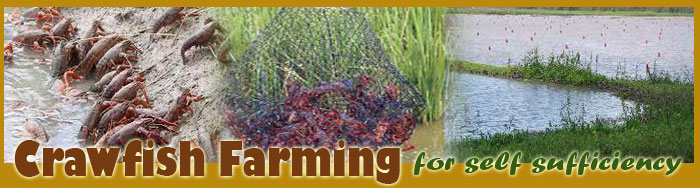
Crawfish Farming For Self Sufficiency Frequently Asked Questions Here are 15 frequently asked questions on crawfish farming for self sufficiency:You can purchase young crawfish (juveniles or berried females) from local hatcheries, agricultural extension offices, or online aquaculture suppliers. Yes, crawfish integrate well with rice farming, vegetable gardens, or aquaponic systems, helping control pests while recycling organic matter. Crawfish are omnivores that consume algae, decaying plant material, insects, detritus, and supplemental feeds like corn, soybeans, or commercial pellets. Under optimal conditions, crawfish typically reach harvestable size in 3–5 months, depending on temperature, food availability, and stocking density. Harvesting usually occurs during warmer months when crawfish are active, using traps or by draining part of the pond to collect them. Yes, they breed readily in farm ponds, especially when provided with stable water conditions, shelter, and proper nutrition. Maintain good water circulation, avoid overstocking, remove excess waste, and monitor pH and oxygen levels regularly to prevent disease. Crawfish are generally hardy, but fungal infections, parasites, and bacterial diseases can occur—good pond hygiene helps reduce risk. Absolutely, homegrown crawfish are fresh, chemical-free, and often tastier than store-bought ones, offering a sustainable alternative to wild-caught seafood. Dig a shallow pond with sloped sides, add vegetation or shelters, fill with clean water, and introduce breeding stock—ensure it has an easy harvesting zone. Compared to other livestock, crawfish farming is relatively low-maintenance, requiring regular feeding and occasional harvesting with minimal daily oversight. Yes, but you may need to extend the growing season with greenhouses, heated tanks, or by selecting cold-tolerant varieties where possible. Their burrowing activity aerates the soil, improves drainage, and recycles nutrients, which supports both aquatic and terrestrial plant growth. Yes, surplus crawfish can be sold locally to markets, restaurants, or directly to consumers, providing a modest but valuable source of extra income. Crawfish offer a nutrient-rich protein source that’s easy to raise, environmentally friendly, and adaptable to small spaces, making them perfect for homesteaders seeking food independence. "Want To Raise Healthy Crawfish? Get Gerard Dawn's Ebook That Will Guide You On How To Raise Healthy Profitable Crawfish For Meat, In Your Own Farm Yard Even If You're
|

How To Raise Crawfish Contact Us Terms of Use Privacy Policy About Us FAQ Site Map