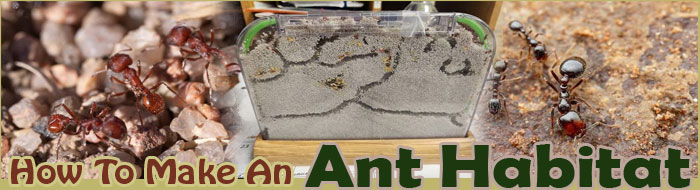
Making An Ant Habitat Frequently Asked Questions Here are 15 frequently asked questions on how to make an Ant habitat:Feed your colony every two to three days, adjusting the amount based on the population size, and remove uneaten food promptly to prevent mold growth and maintain hygiene within the habitat. Most temperate ant species thrive between 68 and 75 degrees Fahrenheit, while tropical species require warmer conditions around 75 to 80 degrees Fahrenheit, so monitor temperatures closely to ensure colony health. Use a hydration chamber filled with water and connected to the nesting area via a wick, or mist the substrate lightly if using soil, ensuring the environment remains moist but not waterlogged to prevent mold. No, mixing different species will result in conflict and likely death for one or both colonies, so always keep species separate and research compatibility if you plan to maintain multiple habitats. Depending on the species and temperature, it typically takes four to eight weeks for a queen to lay eggs, raise them to pupae, and have her first workers emerge to assist her. Remove the affected area immediately, reduce humidity levels, improve ventilation, and consider adding springtails to the setup as they consume mold and help maintain a clean environment for the ants. Connect the old and new habitats with tubing, darken the old habitat to encourage movement, and allow the ants to migrate naturally over several days rather than forcing them, which causes stress. Laws vary by location, so check local regulations before collecting, and always avoid taking endangered species or disrupting established ecosystems, preferring captive-bred queens when possible. Provide at least two to three inches of substrate to allow for natural tunneling behavior, though some species may require deeper layers depending on their nesting habits and colony size. Gel habitats are convenient and provide both structure and nutrition, but they may not support long-term colony health as well as natural substrates, so they are best for short-term observation or beginner setups. Ensure all connections are secure, apply a barrier such as fluon or petroleum jelly around openings if necessary, and regularly inspect the habitat for gaps or weaknesses that ants could exploit. Look for active workers, regular brood development, consistent food consumption, and tunnel construction, as these behaviors suggest the colony is thriving and the queen is laying eggs successfully. Place the habitat in a cool, dark location with temperatures around 40 to 50 degrees Fahrenheit for several months, reducing feeding and ensuring minimal disturbance during this dormant period. Yes, ant habitats are generally safe for children under supervision, as most kept species are non-aggressive, but teach children to observe respectfully and avoid shaking or tapping the habitat excessively. Refer to comprehensive guides like "How To Make A Ant Habitat" by Gerard Dawn, which provides step-by-step instructions, species-specific advice, and troubleshooting tips for successful ant keeping. "Want To Raise Healthy Ants? Get Gerard Dawn's Ebook That Will Guide You On How To Raise Healthy Profitable Ants For Food, In Your Own Farm
|

How To Raise Ants Contact Us Terms of Use Privacy Policy About Us FAQ Site Map