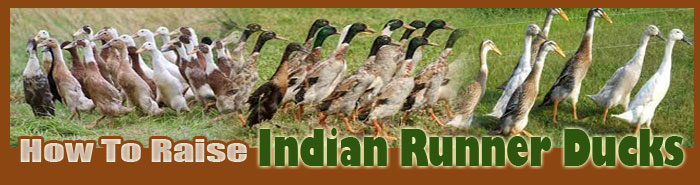
Raising Indian Runner Ducks Frequently Asked Questions Here are 15 frequently asked questions about how to raise indian runner ducks:Indian Runner ducks typically live for 5 to 12 years, with proper care, feeding, and protection from predators. Secure their shelter with strong fencing, and ensure the ducks are safely locked inside at night. Predator-proof the enclosure by using tight mesh wire and burying the bottom of the fence. Indian Runner ducks are social birds and should be kept in pairs or small groups to prevent loneliness and promote natural behavior. Keeping them in a flock is ideal. Indian Runner ducks are hardy and can adapt to both hot and cold climates. However, extreme temperatures may require additional care, like providing warmth during cold winters and shade in the heat. Regularly replace bedding and clean the coop with non-toxic cleaning solutions. Remove any waste, food scraps, and dirty water daily to maintain a hygienic living space. Consult a veterinarian about necessary vaccinations for your Indian Runner ducks. Regular health checks are also important to ensure they are free from common duck diseases. Provide a quiet, clean space with nesting boxes for the ducks to lay their eggs. Proper nutrition, clean water, and adequate daylight hours also help encourage egg production. Yes, Indian Runner ducks are excellent foragers. They help control pests and weeds by eating insects, slugs, and small pests from your garden or farm. Indian Runner ducks naturally breed, and the females typically start laying eggs at around 6 months of age. You can incubate the eggs or allow the ducks to hatch them themselves. Indian Runner ducks are social and usually get along with other ducks, chickens, and farm animals. However, supervise their interactions to ensure safety and avoid aggressive behavior from other animals. During winter, ensure that their shelter is draft-free, dry, and has enough bedding to keep them warm. Provide additional heat if temperatures drop too low, especially for younger ducks. Indian Runner ducks need access to fresh, clean water at all times. They drink about a quart of water per day, and they also need it for dipping their heads to clean themselves. Indian Runner ducks can be noisy, especially when laying eggs or when they feel threatened. Providing a calm environment and reducing stress can help minimize excessive noise. Yes, like all ducks, Indian Runner ducks undergo a molt, typically once a year, in which they shed and regrow their feathers. This process may cause a temporary dip in egg production. Yes, Indian Runner ducks can be raised in urban areas if you have enough space and a suitable, secure environment. Make sure to follow local regulations regarding poultry and animal husbandry. "Want To Raise Healthy Ducks? Get Gerard Dawn's Ebook That Will Guide You On How To Raise Healthy Profitable Indian Runner Ducks, In Your Own Farm Yard Even If You're Just Starting Out In Ducks Farming..."
|

How To Raise Ducks Contact Us Terms of Use Privacy Policy About Us FAQ Site Map