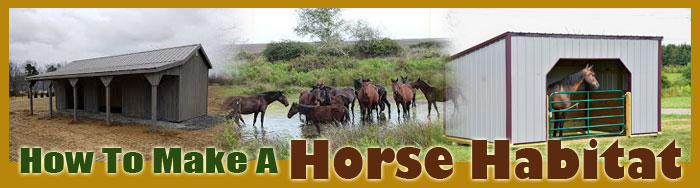
Making A Horse Habitat Frequently Asked Questions Here are 15 frequently asked questions about how to make a horse habitat:Horses can live near wooded areas for shade and wind protection, but avoid dense forests with limited grazing and potential toxic plants or uneven terrain. Choose grass species suited to your region, ensure good drainage, and implement rotational grazing to maintain healthy forage growth and prevent overgrazing. Rotate pastures every few weeks depending on grass growth and season, allowing each section time to recover and regrow for long-term sustainability. Horses need constant access to fresh, clean water for digestion, hydration, and overall health—install reliable watering systems like automatic drinkers or regularly cleaned troughs. Provide shelter, shade structures, and proper ventilation; ensure bedding is dry during winter and offer extra water sources in summer to keep horses comfortable. Poorly designed habitats can lead to muddy conditions, parasite buildup, hoof issues, stress, and behavioral problems due to lack of stimulation or overcrowding. Regularly collect manure from paddocks and compost it properly to reduce flies, parasites, and nutrient overload while enriching garden or field soil. Sand is often preferred over dirt because it drains well, reduces odors, and is easier to clean, though it must be free of fine particles that could irritate hooves. Allow gradual introduction by letting them explore one area at a time, ensuring fences and shelters are secure, and monitoring behavior to ease stress and encourage comfort. Yes, common toxic plants include ragwort, yew, oak, bracken fern, and buttercups—regularly inspect and remove any poisonous vegetation from grazing areas. Use durable, non-toxic fencing, provide shelter, install footing that supports hooves, and avoid sharp objects or hazardous structures to create a safe, functional space. Yes, solar-powered electric fencing is an effective and eco-friendly option for managing grazing and securing paddocks, especially in remote or off-grid locations. Regularly remove manure, clean water sources, rotate pastures, and maintain dry, well-drained areas to minimize disease risk and promote a healthier living environment. Straw, wood shavings, shredded paper, or rubber mats are popular choices—each offers comfort, insulation, and varying levels of absorbency and cost. A well-designed habitat reduces vet bills, improves soil health through managed grazing, and integrates with homesteading practices like composting and sustainable farming. "Want To Raise A Healthy Horse? Get Gerard Dawn's Ebook That Will Guide You On Making A Horse Habitat In Your Own Farm Yard Even If You're Just Starting Out In
|

How To Raise A Horse Contact Us Terms of Use Privacy Policy About Us FAQ Site Map